How to Get Rid of Read More on Blogger
You read blogs (or at to the lowest degree yous've at present read this blog, so you know what a blog is). Enter: the history of blogging.
You probably know of other popular blogs you've read that cover topics you lot're interested in, and I'm guessing you've either managed your own—or at least considered starting a blog at some point.
But do you lot know the history of blogging? It's actually a fascinating journey how we've gotten to this point in the world of blogging as nosotros caput into 2022.
Blogging tin can trace its apprehensive beginnings back to the year 1993. For context here are a few things that also happened during that same year blogging first started:
- Bill Clinton became President of the Usa
- Czechoslovakia ceased to exist and became the Czech Republic & Slovakia
- NAFTA was passed in the U.s.a., Canada and United mexican states
- Famous pop singer Ariana Grande was born
- South Africa's constitution was approved
Blogging has been effectually—and played a role throughout our commonage digital history for the final 29 years. Nosotros're going to talk about the people, places, major events and (at times) tumultuous changes that've made the blogging globe what it is today.
The History of Blogging: How Blogging Has Evolved (1993 to 2022)
- 1993: Blogging Officially Begins
- 1994: Justin Hall Begins Personal Blogging
- 1997: The Term "Weblog" is Coined
- 1998: The First Blogging Platform (Open Diary) Launches
- 1999: Blogger and LiveJournal Launch (with Xanga Soon Following)
- 2003: WordPress and TypePad are Created
- 2003: Google Buys Blogger and Launches AdSense
- 2004: "Web log" Becomes the Dictionary Word of the Twelvemonth
- 2005: Vlogging (Video Blogging) Emerges as YouTube Launches
- 2006: HuffPo and Buzzfeed Combine News and Blogging
- 2007: Microblogging Becomes a Trend
- 2012: Medium is Founded (as a Free Blogging Platform)
- 2016: WordPress Launches the .blog Domain Extension
- 2022: There are Over 31.7 Million Bloggers in the U.S.
Disclosure: Delight note that some of the links below are chapter links and at no additional cost to you, I'll earn a commission. Know that I simply recommend products and services I've personally used and stand behind. When you use one of my affiliate links, the company compensates me, which helps me run this web log and keep all of my in-depth content costless of charge for readers (similar yous).
And since understanding the past can oftentimes be the primal to finding success in the present, we're going to take a trip down retentiveness lane equally we meander through the history of blogging.
Want my Free Guide: How to Kickoff a Profitable Web log?
Come read my guide to starting a blog that's been featured on Forbes, Business organization Insider and Entrepreneur.
Now, permit's dive into the history of blogging!
1993: Blogging Officially Begins

Right around the time Bill Clinton was being inaugurated as the President of the U.s. and Beanie Babies were making their debut, Rob Palmer, the cocky-described world'southward first blogger and digital nomad, started what was essentially a web log for a communications visitor he'd been hired by in London.
When was the first web log started? In 1993 by Rob Palmer.
Side note: There are actually multiple competing claims about who the world'south first blogger is, so information technology's a matter of dispute and likely impossible to conclusively verify.
Either fashion, this start or very early online journal (aka blog) was simply made upwardly of plain text—there were no graphics or fancy formatting, but this very starting time incarnation of a blog did something important. It had the ability to spread ideas.
This blog, which is quite possible the globe's showtime, showed that the Net was teeming with potential. You can hear all about the world's kickoff blog past listening to my interview with Rob from before this yr. It'due south quite an interesting tale of what it was like learning how to make a website in those early days.
1994: The Founding Begetter of Personal Bloggers Starts (Over)Sharing
In 1994, then 19-twelvemonth-quondam Justin Hall began sharing the dirty details of his personal life on his website, Justin'southward Links From the Undercover.
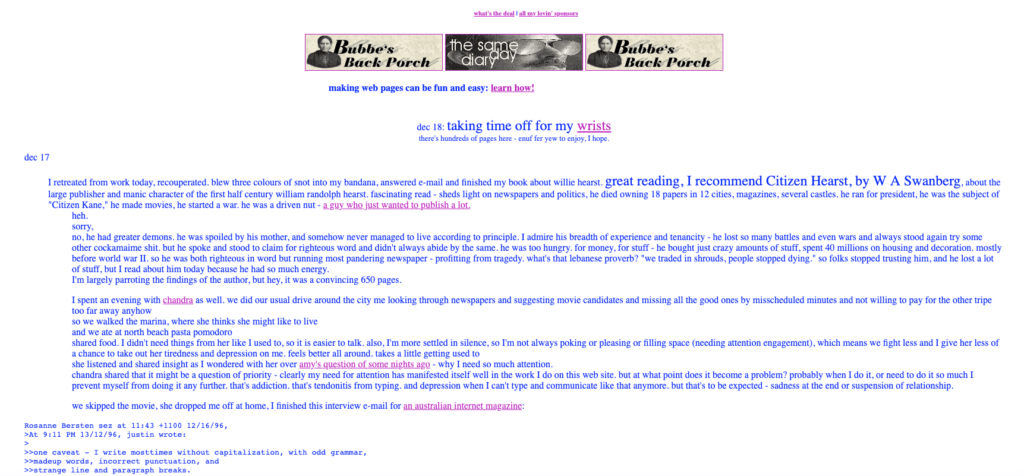
Of grade, at this time, it wasn't called a weblog at all. His website mostly consisted of a list of links (hence the name) with some intermittent text woven in throughout. You lot tin learn more about his story past watching his film, overshare.
Information technology wasn't really until ten years after his Net debut, that the New York Times dubbed Hall the "founding father of personal bloggers."
1997: The Term "Weblog" is Coined
Believe information technology or not, the discussion "blog" actually has a very logical origin.
What's the origin of the word web log? While most people call it a blog, the term is short for weblog. A weblog is a log—or written documentation—that's published on the Earth Wide Web. Put those ii ideas together, and y'all get the term blog.
Early American blogger, Jorn Barger, is credited as the person who came upwards with the word. Prior to that, people called blogs things like "online journals" or "online diaries." The term "weblog" has a certain brevity and charm to information technology, and it wasn't long earlier it became shortened even further to "blog." Read fifty-fifty more than in my article almost What is a Web log?
1998: The First Blogging Platform (Open Diary) Launches
At present that in that location was a term for writing out your thoughts and sharing it with the world online, developers began to take notice and started creating platforms that were designed to allow everyday Internet users the ability to broadcast their own weblogs.
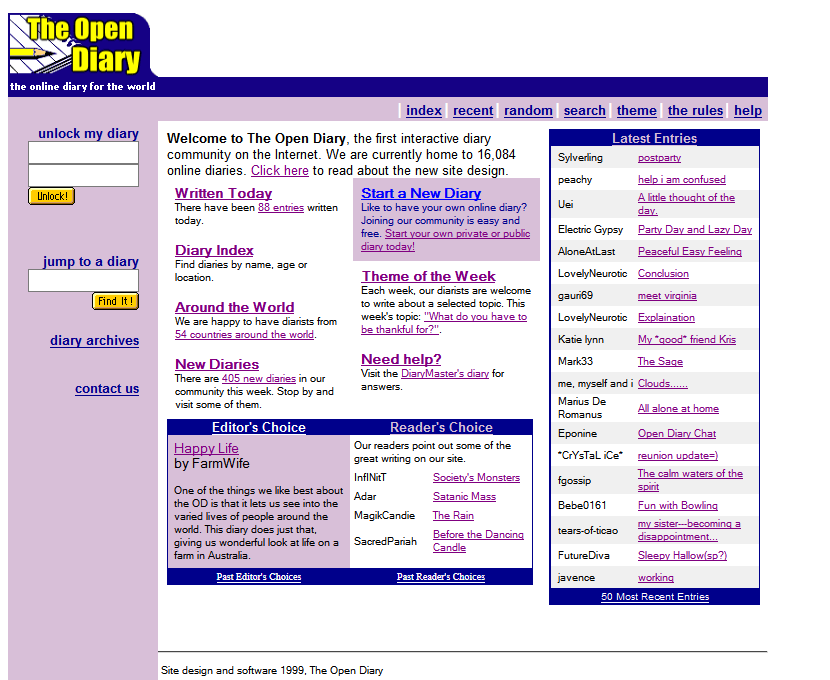
A vital component of the history of blogging, Open up Diary, debuted in 1998 as a blogging platform that not only provided infinite for users to blog, but also a space for members to comment on one another's posts.
It was also right around this time that the discussion "weblog" became too cumbersome and the shortened and more modern slang term, "weblog," began to proliferate.
From this point forrard, this colloquial would remain the same.
1999: Competition Emerges with Blogger and LiveJournal Launching
The plough of the century was nigh here. Adults were worried about an upcoming potential disaster chosen Y2K (spoiler alert: zippo happened) and kids were communicable them all with the latest craze, Pokemon.
In the blogging world, things were humming along smoothly equally more blogging platforms started to emerge in the mass market.
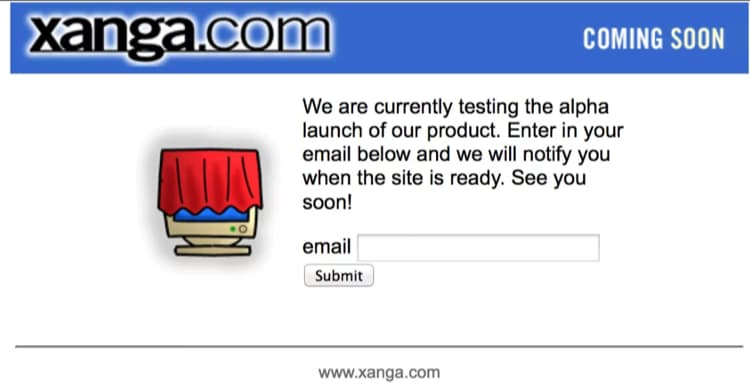
In 1999, LiveJournal and Blogger both scrambled onto the scene, followed by Xanga (formerly a social networking site similar to the better-known MySpace, which wouldn't emerge for several more years) in the yr 2000.
2003: WordPress and TypePad Enter the Scene
Today, over one-third of websites (including my weblog here) run on WordPress.
And looking at how beautiful the product is today, it's about hard to believe their content direction system (CMS) started out looking like this:
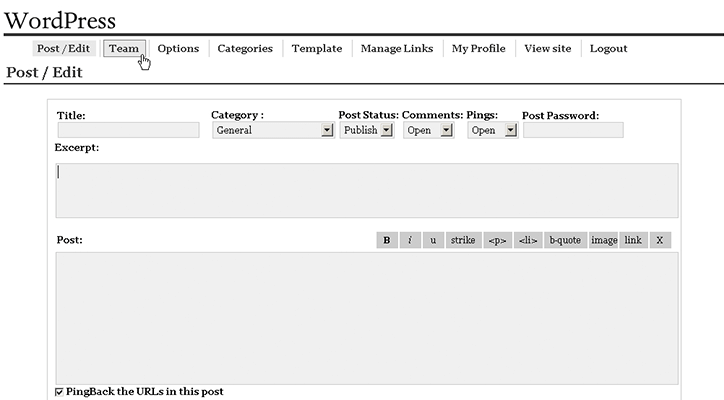
WordPress got its commencement in 2003, when higher student Matt Mullenweg and his friend, Mike Little, had an thought that blossomed into what would eventually become the nearly popular content direction system (CMS) in the globe.
What yr was WordPress created? In 2003 past so college students Matt Mullenweg and Mike Little.
Later that same year, TypePad, another less-technical blogging platform was introduced and connected pushing the boundaries on how to make blogging a more than accessible activeness for people who didn't know how to write their own code.
This is also around the time when a lot of today's top hosting companies started jumping onto the scene and offering what's gradually evolved into the best web hosting plans for bloggers to choose from fifty-fifty to this twenty-four hours.
2003: Google Buys Blogger and Launches AdSense
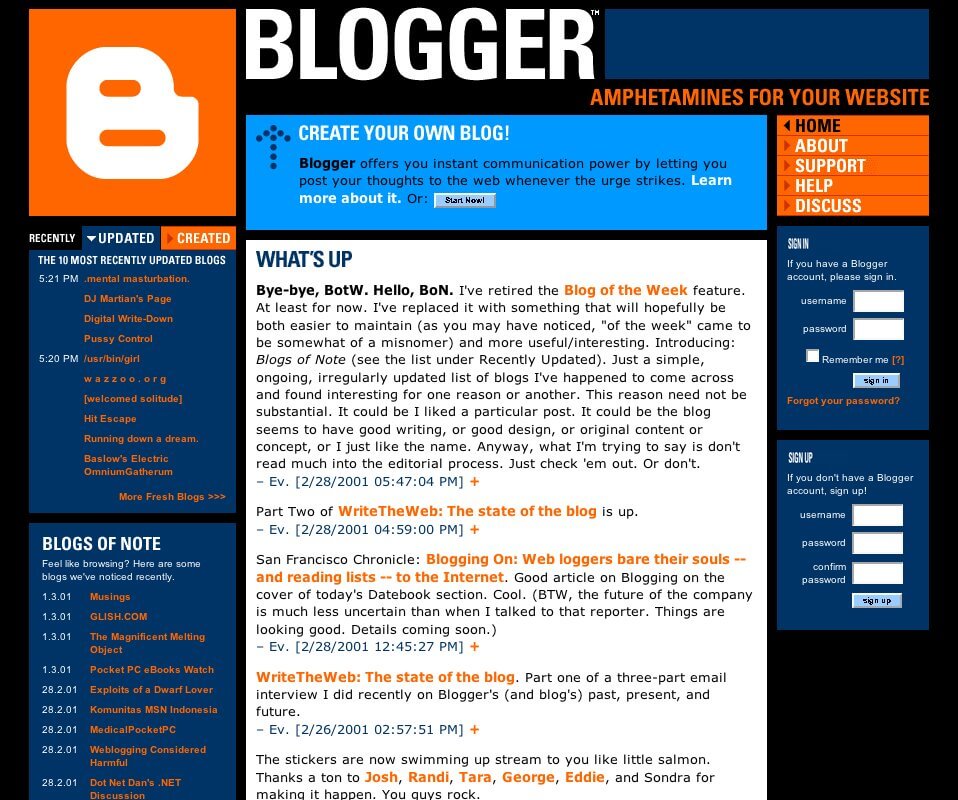
The yr 2003 was a busy ane in the history of blogging.
During that same year, Google purchased one of the largest blogging platforms, Blogger. At that point in time, Google was still fighting hard to climb the ladder of becoming the near pop search engine in the world. And buying up all of those blogs immune the company to glean more than information than always earlier—which drastically improved the quality of their growing search engine.
At the same fourth dimension every bit they were buying upwardly popular blogging platforms, Google was also working on and launching two of their flagship products, AdSense and AdWords.
These are the products that, among other things, let people to monetize their blogs through advertisements from relevant products and services, which is a big step in altering the course of the history of blogging.
If you've seen ads for everything from shoes to laundry detergent, and your dream motorcar floating around on the blogs you lot read, then you know who yous've got to give thanks.
Wondering how you tin drive more traffic to your site to make coin with your blog? Check out my guides on how to practise exactly that:
- How to Showtime a Web log (and Make Money) This Year
- 32 Proven Ways to Drive Traffic to Your Weblog (Today)
- How to Make Coin Blogging on the Side of Your Mean solar day Job
Desire my Gratis Guide: How to Kickoff a Profitable Blog?
Come up read my guide to starting a blog that's been featured on Forbes, Business Insider and Entrepreneur.
2004: "Blog" Becomes the Word of the Year
Every year since 2003, Merriam-Webster has published a list of words that seem especially relevant to the year in question. Recent words of the twelvemonth lately take included "justice," "feminism," and "surreal."
In 2004, withal, the most looked-upward word of the year on the Merriam-Webster online dictionary was "blog."
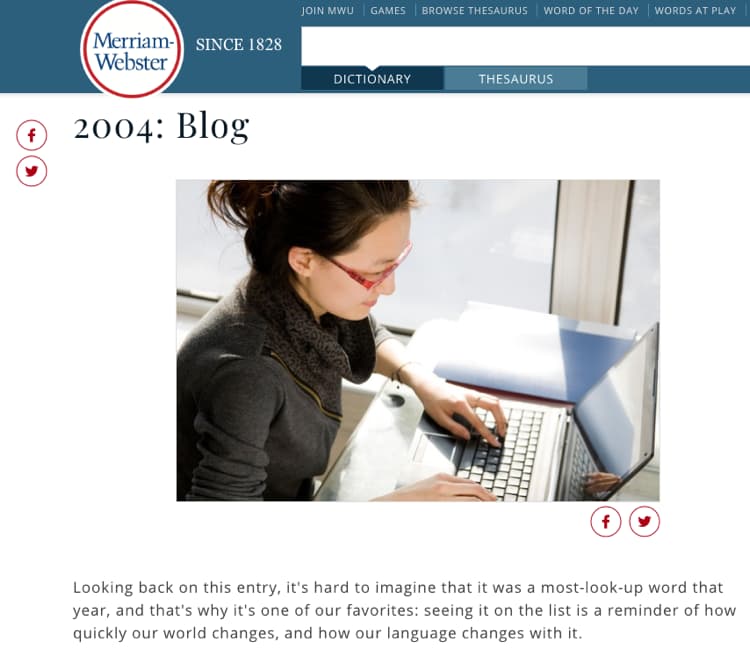
This is meaning, because information technology showed how much blogging was impacting the mainstream world.
Rather than automatically tuning in to news stations or opening a newspaper, Americans were beginning to plow to their favorite blogs for the content (and even news updates) they were craving.
Equally we all know now, this has ended in pretty mixed results. A lot of important news that doesn't make information technology to the mainstream outlets can be distributed through blogs (and on Twitter), but and so can a lot of fake and potentially damaging, misleading news.
2005: Vlogging Happened (YouTube Launches)
In 2005, YouTube officially launched, and while it didn't happen right away, the platform set the phase for what would get the modern vlog.
What is a vlog? A video-based weblog.

At the same fourth dimension, the Yahoo! Videoblogging Group saw an increase in their membership. In curt, this is the year that a new way to express yourself online was truly built-in.
Some of the early vloggers who are withal pop today include Smosh and Michelle Phan.
2006: HuffPo and BuzzFeed Blur the Lines Between Blogs and News
While some had been looking at blogs and taking them as seriously equally they the largest news outlets for years by this point, 2006 brought a new age with the launches of Huffington Post and BuzzFeed.
What, actually, is the difference between a blog and a news site? These platforms had the wait and feel of a mainstream news site, but glancing through some of the "articles," many were written every bit editorial content, fun listicles and explorations into other creative blog post ideas writers wanted to try out with their growing web log audiences. These sites also mastered the fine art of teaching their journalists how to write a headline that'southward designed to capture reader attention.
The side issue is that the distinction between fact and opinion became more blurred later this point, which is a tendency that's continued today in some corners of the Internet.
2007: Microblogging Becomes a Affair
In late 2006, ProBlogger's Darren Rowse suggested to his readers that they keep their blog postal service length curt enough to let the average reader to become through it in about a minute and a half. It was as well around this time that a little known blogger, Tim Ferriss started his blog to drum upwards press for his upcoming book, The 4-60 minutes Workweek.
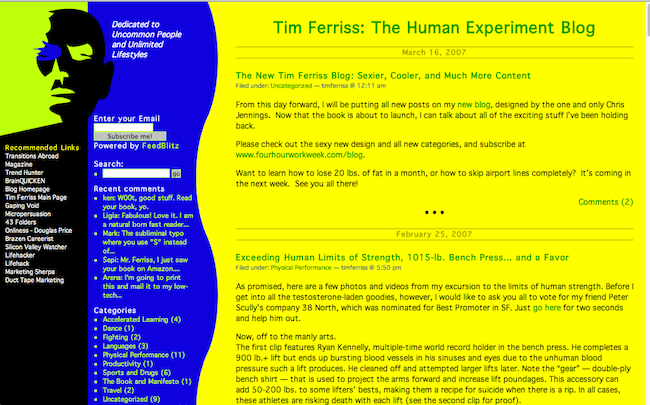
If the average person reads 200 or 250 words per minute, this would mean that the platonic blog postal service during this menstruum of time may take been somewhere between 300 and 400 words. That's pretty curt past today's standards. But, if short was proficient, so ultra-curt must have been meliorate, right?
A new era in the history of blogging, called microblogging, had begun.
At this point, Twitter (then chosen Twttr) had been humming along for about a twelvemonth, merely it finally took off and became explosively popular in 2007. How much could you really say in 140 characters, (which was the limit at the time)? Enough, apparently, because the site is even so wildly successful over a decade afterwards.
2012: Medium is Founded
In 2012, while yous were learning the trip the light fantastic to Gangnam Manner, Medium was launching.

This online publishing platform (that now has some paywalled content), was wide open to all for the first few years of its life. In that location are both professional person and amateur writers publishing their blog posts on Medium, and similar to BuzzFeed and HuffPo, information technology tends to blur the line between news and opinion.
Medium gave all the same another outlet to social journalists who wanted to make their mark, find a target audition online and abound their communities.
2016: WordPress Launches the .blog Domain
Blogging had become and then popular by 2016, that WordPress decided to add the domain extension .blog to its list of possible weblog URLs.
This meant that in addition to the original six (at the fourth dimension) domain extensions in popular utilise, which included .com, .cyberspace, and .org, people and organizations could now choose a domain name with the .blog extension.
This motion opened up many new domain options and highlighted the popularity of blogging.
2022: There are Over 31.seven Million Bloggers in the U.S. Lonely
The history of blogging will never be over… and fifty-fifty better, you can still become a office of it (along with 31.7 Million+ other bloggers in the U.Southward. lone).
Whether you're brand new at blogging or y'all've been trying your hand at it for a while and only haven't quite gotten to where you want to be, I've compiled my ultimate guide to starting a blog every bit a completely free resource that'll help accomplish your goals when it comes to making money with your weblog this yr—whether from landing some paid blogging jobs or by selling your own products (like writing an eBook, creating your own blogging courses or selling blogging books to an audience eager to learn your arts and crafts).
My guide will teach you everything from how to write a blog post, to creatively naming a blog, choosing the right monthly hosting plan for your blog, implementing intelligent blog SEO strategies and more.
Don't let another yr go by without staking out your ain corner in the history of blogging.
How to Get Rid of Read More on Blogger
Source: https://www.ryrob.com/history-of-blogging/
0 Response to "How to Get Rid of Read More on Blogger"
Post a Comment